
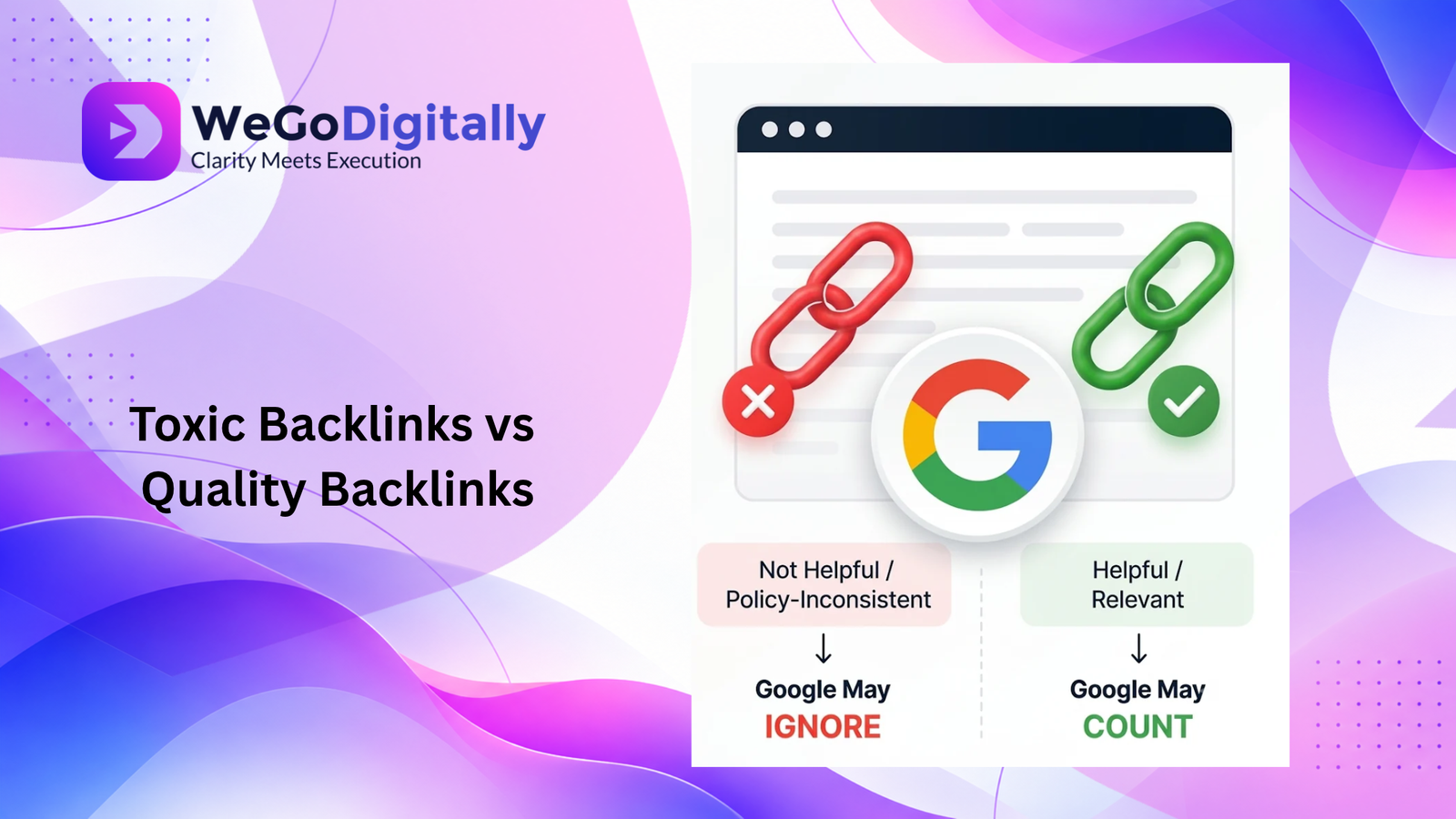
Toxic Backlinks vs Quality Backlinks: How to Audit Your Website’s Link Profile in 2026
Learn how to audit backlinks, identify suspicious link patterns, evaluate backlink quality and build a healthier website link profile using practical SEO strategies for 2026.
How to audit backlinks is an important question for businesses that want to maintain a healthy website and improve their organic search visibility. Backlinks help search engines discover connections between websites, but not every link provides the same value. While relevant and trustworthy backlinks can support your online presence, manipulative link-building practices may create SEO risks.
A website may receive backlinks from industry publications, business directories, blogs, partners and other online sources. Some links are earned naturally because a website publishes useful information. Others may come from automated link schemes, paid placements or unrelated websites.
Understanding the difference between toxic backlinks SEO risks and quality backlinks is essential. A proper backlink quality analysis helps businesses understand where their links originate, identify suspicious patterns and decide whether any action is necessary.
Are Your Website’s Backlinks Helping or Hurting SEO?
Backlinks remain an important part of understanding how websites are connected across the internet. However, backlink quantity alone does not determine the value of a website’s link profile.
A link from a relevant industry website can help potential customers discover your business. A naturally earned editorial mention can also provide referral traffic and improve your brand visibility.
On the other hand, manipulative practices such as buying links to influence rankings, participating in link exchanges at scale or using automated link-building schemes can violate Google’s spam policies.
The objective of a backlink audit is not to remove every unfamiliar link. It is to understand your website’s backlink profile and identify patterns that genuinely require attention.
1. Understand What Makes a Quality Backlink
A quality backlink generally comes from a relevant website, appears naturally within useful content and provides value to readers. Its purpose should be to help users discover additional information rather than artificially manipulate search rankings.
Important Characteristics of Quality Backlinks
- Industry relevance: Links from websites covering related industries, topics or services can help users discover relevant information.
- Editorially earned links: Links given naturally because another website finds your content useful or informative.
- Useful resource mentions: Links from research articles, educational resources, industry guides and informative publications.
- Original research and valuable content: Statistics, case studies, original insights and helpful resources that other websites genuinely want to reference.
- Relevant business directories: Genuine professional and industry directories that help customers find your business.
For example, if a digital marketing agency publishes an informative SEO guide and an established marketing publication references it as a resource, that can be a meaningful backlink.
2. Identify Suspicious Backlink Patterns
Suspicious backlinks are links that may be associated with manipulative SEO practices. However, a website having a low domain authority score, unfamiliar domain name or limited traffic does not automatically mean that its backlinks are harmful.
When performing a backlink audit, look for unusual patterns rather than judging individual links based on a single SEO metric.
Common Backlink Warning Signs
- Unrelated websites: Large numbers of links coming from websites with no meaningful connection to your industry or content.
- Paid manipulative links: Purchased links intended to influence search rankings without appropriate qualification.
- Automated link-building schemes: Links generated through automated programs, link networks or mass submission services.
- Repeated keyword-rich anchor text: An unusually large number of backlinks using identical commercial keywords.
- Unnatural link exchanges: Large-scale reciprocal linking arrangements created primarily to manipulate rankings.
- Sitewide suspicious links: Repeated links appearing across thousands of unrelated pages through artificial arrangements.
Important: Not every spam-looking backlink is a Google penalty risk. Search engines can ignore many low-quality links. Investigate the source, context, anchor text and acquisition pattern before deciding to remove or disavow anything.
3. Use SEO Tools to Analyse Your Backlink Profile
SEO tools make it easier to understand which websites link to your domain, how those links were acquired and whether unusual changes have occurred.
Google Search Console
Google Search Console provides Google’s available backlink data through its Links report. You can review external links, top linking websites, top linked pages and commonly used linking text.
It is a useful starting point for understanding your website’s backlink profile. Visit Google Search Console to access your website’s search performance and link information.
Ahrefs
Ahrefs provides backlink analysis features that help you examine referring domains, anchor text, backlink growth, lost links and competing websites.
Semrush
Semrush offers backlink analytics and backlink audit features that help identify unusual link patterns and evaluate referring domains.
Remember that third-party toxicity scores are automated indicators, not official Google penalties. Use them as investigation signals rather than final decisions.
4. How to Audit Backlinks Step by Step
A structured backlink audit helps you understand the quality, relevance and overall condition of your website’s external links. Follow these steps before making any changes.
Step 1: Collect Your Backlink Data
Start by exporting available backlink information from Google Search Console and your preferred SEO tools. Collect referring domains, individual backlinks, anchor text and target URLs.
Step 2: Review Referring Domains
Examine the websites linking to your domain. Consider their relevance, content quality, legitimacy and the context in which your website is mentioned.
Step 3: Analyse Anchor Text Distribution
Review the text used in backlinks. A natural profile can contain branded terms, website URLs, descriptive phrases and relevant keywords.
Investigate unusually concentrated patterns of exact-match commercial keywords, especially when they appear across unrelated websites.
Step 4: Investigate Suspicious Links
Open suspicious referring websites and examine the actual pages containing your backlinks. Check whether the link is relevant, editorially placed or part of a manipulative arrangement.
Step 5: Check Backlink Growth and Changes
Compare backlink reports over time. Sudden increases in referring domains, repeated anchor text or unusual link acquisition patterns deserve investigation.
Step 6: Decide Whether Action Is Necessary
Classify the links based on your findings. Some links may be completely natural, while others may require monitoring, removal requests or further investigation.
Do not remove or disavow links simply because a tool labels them toxic. Google recommends using its disavow tool cautiously and only in specific circumstances.
5. When Should You Use Google’s Disavow Links Tool?
Google’s Disavow Links tool allows website owners to ask Google to ignore specified backlinks when evaluating their website. However, it is not a routine backlink-cleaning tool.
Google generally recommends disavowing backlinks only when:
- Your website has a considerable number of spammy, artificial or low-quality backlinks.
- Those backlinks were created through manipulative link-building practices.
- There is a manual action for unnatural links or a strong likelihood of one.
Before using the tool, try to contact the relevant website owners and request the removal of links that you or someone working on your behalf created artificially.
If disavowal is genuinely necessary, carefully prepare the domain or URL list and follow Google’s official instructions: Google Disavow Links Tool documentation.
Remember: Disavowing random low-authority backlinks can be unnecessary and potentially counterproductive. Always investigate the actual link profile before submitting a disavow file.
6. Build a Sustainable Link-Building Strategy in 2026
Once you understand your existing backlink profile, the next step is to focus on earning relevant and trustworthy links. Sustainable link-building strategies should prioritise useful content, industry relationships and genuine business value.
Publish Valuable and Original Content
Create informative articles, industry guides, original research, case studies and practical resources that other websites may naturally reference.
Build Industry Relationships
Connect with relevant businesses, industry professionals, publishers and organisations. Genuine relationships can create opportunities for meaningful mentions and collaborations.
Create Link-Worthy Resources
Develop useful resources such as checklists, statistics, research reports, comparison guides and informative tools that provide value to your target audience.
Earn Relevant Editorial Mentions
Share valuable insights with industry publications and relevant websites. Editorial links should be earned through the usefulness and relevance of your contribution rather than purchased to manipulate rankings.
Focus on Relevance Instead of Quantity
A sustainable SEO backlink strategy should prioritise contextual relevance, natural acquisition and audience value instead of chasing hundreds of unrelated backlinks.
7. SEO Backlink Audit Checklist
Use this practical checklist when reviewing your website’s backlink profile.
- Export backlink data from Google Search Console and SEO tools.
- Review the referring domains linking to your website.
- Check whether linking websites are relevant and legitimate.
- Analyse anchor text distribution for unusual patterns.
- Identify potentially manipulative paid links and link schemes.
- Investigate sudden increases in backlinks and referring domains.
- Review important pages receiving external links.
- Investigate suspicious links manually before taking action.
- Monitor changes in your backlink profile over time.
- Use Google’s disavow tool only when the circumstances justify it.
- Develop a long-term strategy for earning relevant, valuable backlinks.
Toxic Backlinks vs Quality Backlinks: Key Differences
Understanding the difference between these two backlink categories makes it easier to evaluate your website’s link profile.
- Quality backlinks: Relevant, naturally earned links that provide genuine value to readers.
- Manipulative backlinks: Links created primarily to influence search rankings through artificial or prohibited practices.
- Natural backlinks: Links received because another website finds your content useful or relevant.
- Unnatural backlinks: Links associated with schemes such as manipulative paid placements, automated link generation or large-scale link exchanges.
The objective is not to achieve a perfect backlink score. It is to maintain a natural link profile and avoid practices that violate search engine guidelines.
“A strong backlink profile is built through relevance, trust and genuine value — not simply the number of links pointing to your website.”
Frequently Asked Questions About Backlink Audits
1. How do I audit backlinks for my website?
Start by exporting your backlink data from Google Search Console and SEO tools such as Ahrefs or Semrush. Review referring domains, anchor text, link relevance and unusual acquisition patterns. Investigate suspicious links manually before deciding whether any action is required.
2. Are all toxic backlinks harmful to SEO?
No. Third-party SEO tools may label certain backlinks as toxic based on automated metrics. These scores do not represent official Google penalties. Many low-quality links are ignored by Google, so investigate the actual links and their context before taking action.
3. How often should I audit backlinks?
Review your backlink profile periodically, such as every few months, depending on your website’s size and link-building activity. You should also investigate unusual backlink growth, suspicious campaigns or relevant notifications from Google Search Console.
4. Should I disavow every spam backlink?
No. Google recommends using the disavow tool cautiously. It is generally intended for websites with a considerable number of artificial or spammy backlinks and a manual action or strong likelihood of one. Do not disavow links simply because an SEO tool gives them a low-quality score.
5. What are the best tools for backlink quality analysis?
Google Search Console, Ahrefs and Semrush are useful tools for backlink analysis. They help you review referring domains, anchor text, backlink growth and potentially suspicious link patterns.
6. What is the difference between toxic backlinks and quality backlinks?
Quality backlinks are generally relevant and naturally earned, providing value to readers. Manipulative backlinks are created through artificial practices intended to influence search rankings and may violate Google’s spam policies.
7. How can I build quality backlinks in 2026?
Focus on publishing original content, developing useful resources, building industry relationships and earning relevant editorial mentions. Prioritise genuine relevance and audience value instead of purchasing large quantities of backlinks.
Strengthen Your Website’s SEO Foundation
Understanding how to audit backlinks is an important part of maintaining a healthy website and developing a sustainable SEO strategy. Regularly reviewing referring domains, anchor text, link relevance and unusual patterns can help businesses identify potential risks and make informed decisions.
Remember that a successful backlink strategy is not about collecting the highest number of links. It is about earning relevant, trustworthy links through useful content, genuine industry relationships and meaningful online contributions.
At WeGoDigitally, we help businesses strengthen their online presence through technical SEO, content optimisation, website development and strategic digital marketing.
Explore our Digital Marketing Services to understand how we can support your business’s online growth.
If you need professional support with your website’s SEO strategy, backlink analysis or organic visibility, contact WeGoDigitally to discuss your requirements.
Additional SEO Resources
For more information about backlink practices and Google’s guidelines, explore these official resources:
- Google Search Central – Spam Policies – Understand Google’s policies regarding link spam and manipulative SEO practices.
- Google Search Console – Disavow Links Tool – Learn when and how to disavow backlinks.